

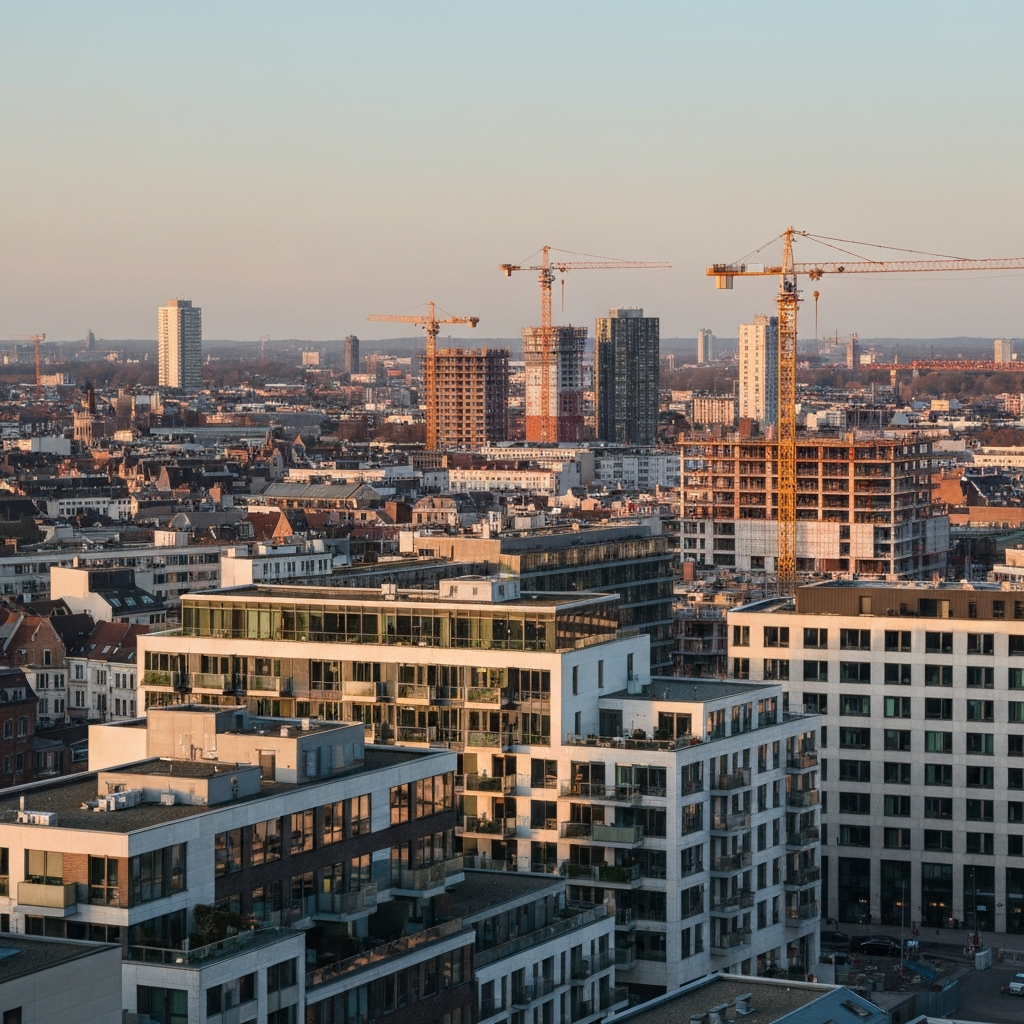
Brussels’ real estate market is undergoing significant transformations, influenced by various factors including economic shifts, policy changes, and urban development projects. Understanding these dynamics is crucial for prospective buyers, renters, and investors.
Current Market Trends
In 2025, Belgium’s housing prices experienced a notable increase, with median prices for existing homes rising by 5.6% year-on-year. This surge was largely driven by policy measures such as reduced registration fees in Flanders and Wallonia, which enhanced affordability and stimulated demand. However, projections for 2026 and 2027 suggest a moderation in price growth, with anticipated increases of 3.0% and 2.5% respectively. Factors contributing to this slowdown include higher interest rates, slower economic growth, and diminished purchasing power.
Regional Disparities
Brussels remains the most expensive region in Belgium for housing. In 2025, the average price of a house in Brussels was €582,930, reflecting a 2.2% increase from the previous year. Apartments averaged €298,874, marking a 2.8% rise. Notably, the price of new-build apartments in Brussels exceeded the average price of houses, indicating a premium for new constructions.
Urban Development Initiatives
Several urban development projects are reshaping Brussels’ housing landscape. The Rue des Palais project in the North Quarter aims to transform a former police station into 60 diverse housing units, ranging from studios to four-bedroom apartments. This initiative also includes communal gardens and spaces to foster community engagement.
Similarly, the Viridis project in Schaerbeek is introducing a mixed-use development comprising 115 energy-efficient apartments, along with offices, retail spaces, and a nursery. Designed around a central courtyard, Viridis emphasizes sustainable living and community integration.
Policy Measures Addressing Vacant Properties
To combat housing shortages, Brussels has implemented stringent measures against property vacancies. Owners of unoccupied homes face escalating fines and legal provisions designed to discourage long-term vacancies. This approach aims to increase the availability of housing by incentivizing owners to rent or sell idle properties.
Looking Ahead
As Brussels continues to evolve, staying informed about market trends and development projects is essential for making informed real estate decisions. Whether considering purchasing, renting, or investing, understanding the city’s dynamic housing landscape will provide a strategic advantage in navigating the market.