

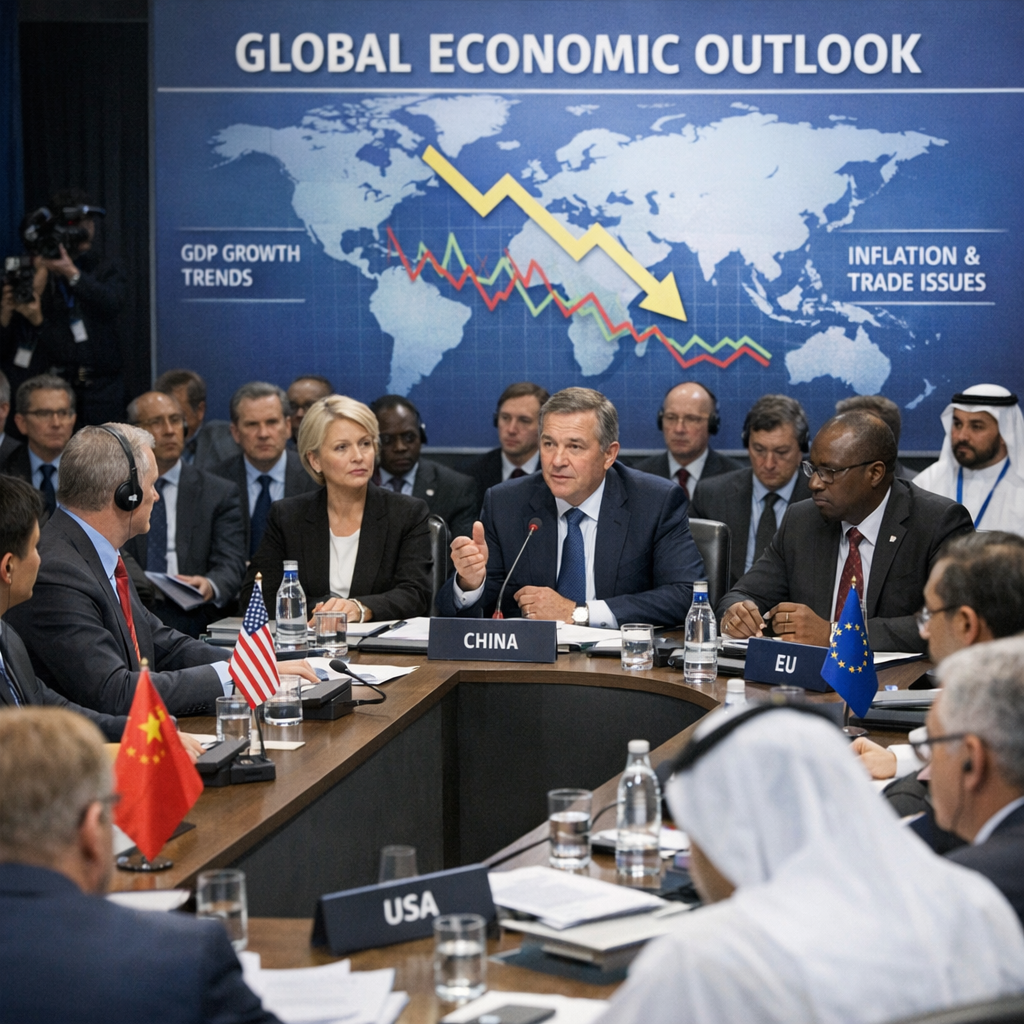
The global economy is currently navigating a complex landscape marked by geopolitical tensions, technological advancements, and shifting trade dynamics. Understanding these trends is crucial for assessing their potential impact on Belgium’s economy.
Global Economic Outlook
Recent reports indicate a moderation in global economic growth. The International Monetary Fund (IMF) projects global growth to slow to 3.1% in 2026, influenced by factors such as the ongoing conflict in the Middle East and associated energy price volatility. This slowdown is expected to be more pronounced in emerging markets and developing economies. Source
Technological Advancements and Trade Dynamics
Investment in artificial intelligence (AI) is driving economic growth, particularly in the United States, where it bolsters the tech sector. However, this rapid technological adoption raises concerns about potential job displacement and the broader economic implications. Additionally, trade policies remain a source of uncertainty, with potential shifts in tariffs and trade agreements influencing global markets. Source
Implications for Belgium
As an open economy with strong trade ties, Belgium is sensitive to global economic fluctuations. The projected slowdown in global growth could affect Belgium’s export-driven sectors, particularly if key trading partners experience economic downturns. Moreover, rising energy prices due to geopolitical tensions may increase production costs for Belgian industries and impact consumer prices.
On the technological front, while AI presents opportunities for innovation and productivity gains, it also necessitates workforce adaptation. Belgian businesses and policymakers may need to invest in reskilling programs to mitigate potential job displacement and harness the benefits of technological advancements.
In conclusion, staying informed about global economic trends is essential for Belgium to navigate potential challenges and capitalize on emerging opportunities in an interconnected world.