

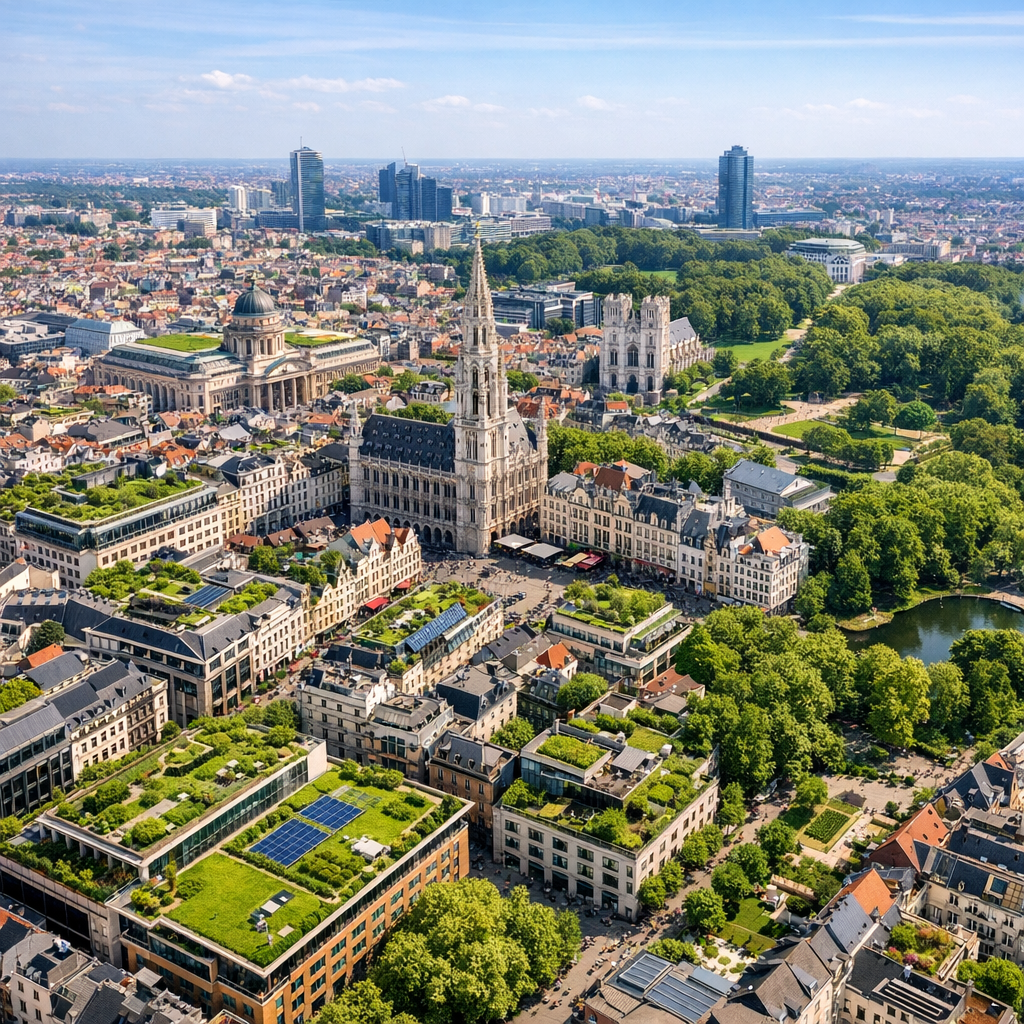
Brussels, like many urban centers, experiences the urban heat island (UHI) effect, where city temperatures are notably higher than those in surrounding rural areas. This phenomenon arises from factors such as extensive concrete surfaces, limited vegetation, and heat generated by human activities.
Understanding the Urban Heat Island Effect
The UHI effect results in elevated temperatures in urban areas compared to their rural counterparts. In Brussels, this temperature disparity can reach up to 10°C in certain neighborhoods. Key contributors include:
- High concentration of hard surfaces like concrete and asphalt.
- Narrow streets that restrict air circulation.
- Limited green spaces.
- Heat emissions from vehicles, industrial activities, and air conditioning systems.
These factors combine to absorb and retain heat during the day, releasing it slowly at night, leading to sustained higher temperatures in the city.
Impacts on Brussels
The UHI effect in Brussels has several implications:
- Increased energy consumption due to higher demand for cooling.
- Elevated health risks, particularly for vulnerable populations during heatwaves.
- Potential strain on urban infrastructure.
For instance, satellite data from the Copernicus Sentinel-3 mission recorded land surface temperatures exceeding 47°C on sealed urban surfaces in Brussels, while temperatures beneath the tree canopy of the Sonian Forest reached just 24.5°C, highlighting the stark contrast between urban and green areas.
Mitigation Strategies
To combat the UHI effect, Brussels has initiated several measures:
- Developing urban cooling islands by increasing vegetation, water features, and shaded areas.
- Implementing architectural interventions like green roofs and wall gardens.
- Replacing paved surfaces with green spaces to reduce heat absorption.
These efforts aim to enhance the city’s resilience to climate change and improve the quality of life for its residents.
Community Involvement
Residents can also contribute by:
- Planting trees and maintaining gardens.
- Using reflective materials for roofs and pavements.
- Reducing energy consumption to lower heat emissions.
Collective action is essential in mitigating the UHI effect and fostering a cooler, more sustainable urban environment.