

By Eva Janssens
What’s happening
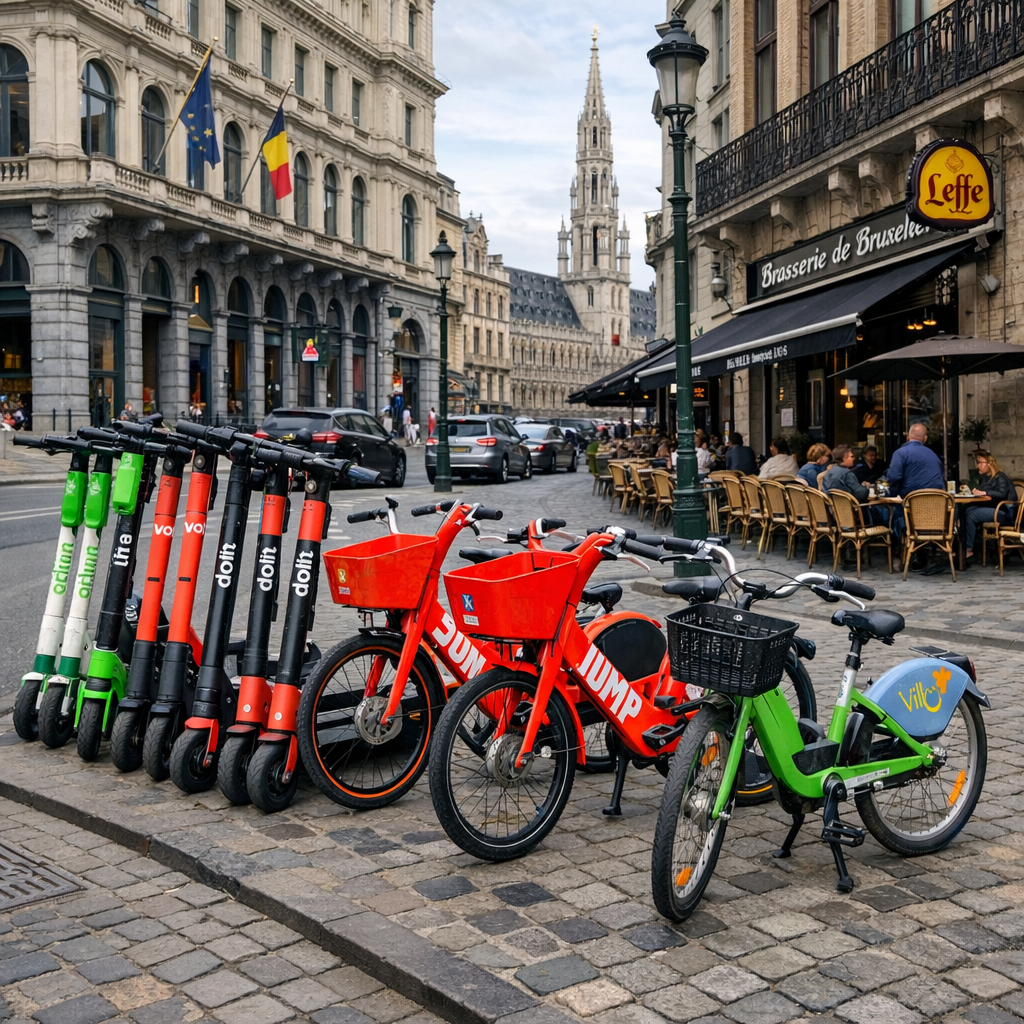
In July 2026, Brussels’ Council of State annulled the existing licences for free-floating shared mobility—think e-scooters and bike shares—for not complying with legal requirements related to administrative acts. As a result, operators have been ordered to remove their fleet from public spaces by 1 September 2026. Expect disruption across last-mile transport services.
The legal and policy background
The problem stems from a decree in July 2023 organizing shared mobility services in Brussels. That decree—and an amended version from early 2025—was challenged and ultimately struck down due to lack of required formal motivation in administrative decisions. In short: regulators didn’t properly justify how certain rules were made.
Reactions from the city and operators
Regional authorities have asked affected companies to pull their shared bikes and scooters off the streets. Meanwhile, some political groups are pushing to preserve at least the bike services, calling them essential to everyday mobility and sustainability goals. The owners and users of these services warn of sudden inflexibility and question how public transport gaps will be filled without them.
What residents can expect now
- Reduced availability of free-floating vehicles for short trips inside the city.
- Potential increase in demand for public transit, cycling infrastructure, and fixed bike docks.
- Active efforts by city planners to revise the legal framework, to restore shared mobility under more robust regulation.
- Stronger calls from citizens for clearer rules, accountability, and equitable distribution—especially in underserved communes.
Why it matters long-term
This isn’t just a transport issue. Shared mobility connects to Brussels’ goals for climate action, public space design, and social inclusion. Removing licences without ready alternatives risks pushing more people into cars or taxis, undermining efforts to reduce traffic emissions and reclaim street space for pedestrians and cyclists.
What’s next
The Brussels-Capital Region must respond by crafting a new decree that meets legal standards of motivation. Municipal authorities, cycling federations, sustainability groups, and affected businesses are likely to be involved in crafting it. For residents, watching announcements in early September will be key: will shared bikes and e-scooters return, under stricter rules? Or will the city shift toward alternatives like fixed-station bike-sharing, car-sharing, or expanding transit routes?
In the meantime, if you’re relying on shared mobility, it may be wise to have backup options—public transport, bike rentals, or shared car schemes—ready to use.