

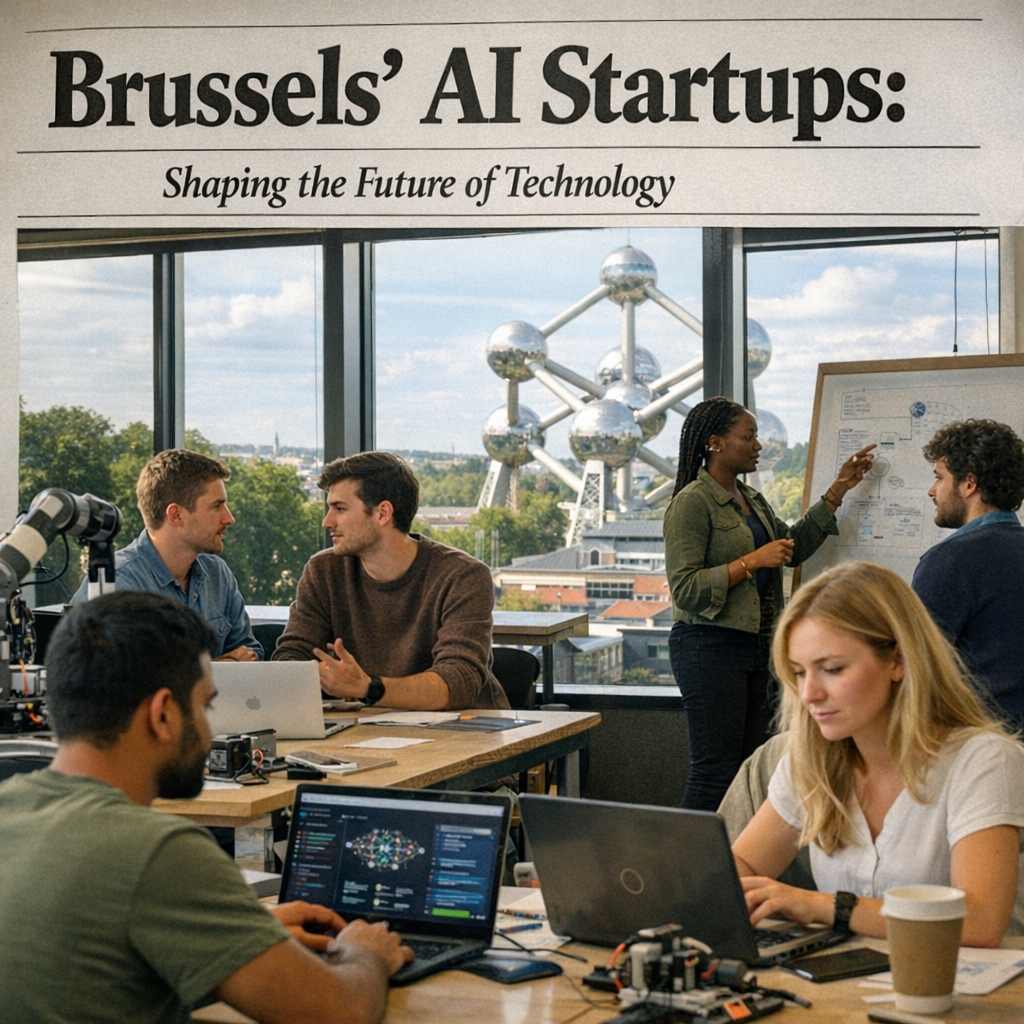
Brussels is rapidly emerging as a hub for artificial intelligence (AI) innovation, with numerous startups leveraging AI to revolutionize various sectors. This growth is not only enhancing business operations but also impacting the daily lives of residents.
Leading AI Startups in Brussels
Several AI-focused companies in Brussels are making significant strides:
Collibra
Founded in 2008 as a spin-off from the Vrije Universiteit Brussel, Collibra specializes in data governance and management. The company achieved ‘unicorn’ status in early 2020, with a valuation exceeding €2 billion, underscoring its prominence in the AI landscape.
Axiles Bionics
Emerging from the BruBotics research center at the Vrije Universiteit Brussel, Axiles Bionics focuses on developing advanced bionic prosthetics. Their innovations aim to improve mobility and quality of life for individuals with lower limb amputations.
Superlinear
Superlinear offers an enterprise AI platform designed to enhance decision-making processes within large organizations. Their operating system, Holon, integrates people, processes, and machines to facilitate real-time forecasting and planning.
AI’s Impact on Daily Life
The influence of AI extends beyond the business realm, affecting various aspects of daily life in Brussels:
- Healthcare: AI applications are being explored to improve patient care and streamline administrative processes, potentially leading to more efficient healthcare services.
- Transportation: AI-driven solutions are enhancing public transportation systems, optimizing routes, and improving passenger experiences.
- Employment: Studies indicate that a significant portion of jobs in Brussels are highly exposed to AI, prompting discussions on workforce adaptation and the future of employment.
Challenges and Considerations
Despite the promising advancements, the integration of AI raises important considerations:
- Transparency: Consumers expect clear explanations regarding AI applications to build trust and understanding.
- Regulation: Effective policies are necessary to ensure ethical AI use and to address potential societal impacts.
- Workforce Adaptation: As AI automates certain tasks, there is a need for reskilling programs to prepare the workforce for evolving job roles.
Brussels’ AI startups are at the forefront of technological innovation, offering solutions that have the potential to transform industries and everyday experiences. As these technologies continue to evolve, it is crucial to address the accompanying challenges to fully realize the benefits of AI integration.