

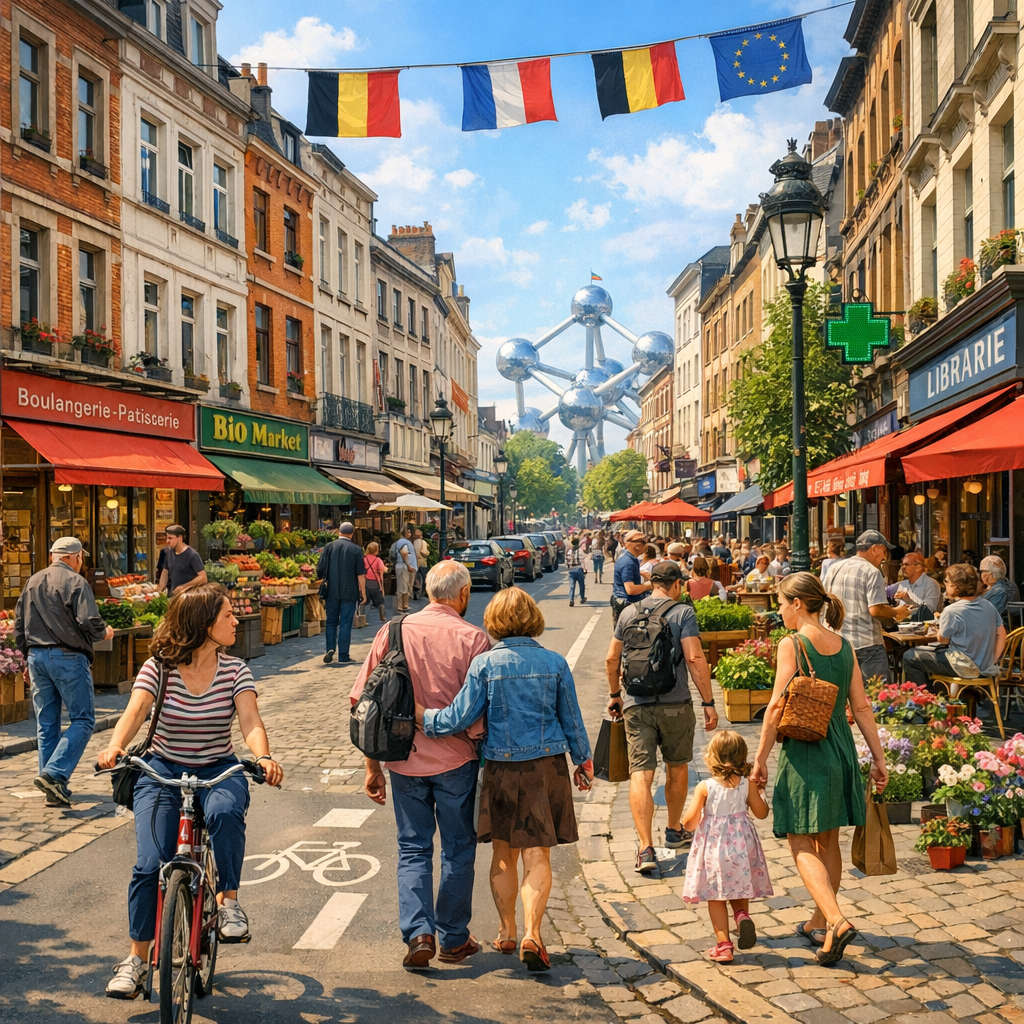
Brussels is making significant strides toward becoming a ’10-minute city,’ a concept where residents can access essential services and amenities within a ten-minute walk or bike ride from their homes. This initiative is central to the city’s Municipal Plan for Sustainable Development ‘BXL 2050,’ adopted by the City Council on 27 May 2024. The plan envisions a sustainable, inclusive, and accessible city by 2050, structured around seven major ambitions and the city’s seven major territories.
Interactive Mapping Tool Supports the Vision
To support this vision, Brussels has introduced an interactive mapping tool that allows residents to visualize and plan their access to various services within the 10-minute radius. This tool is designed to help urban planners and citizens identify areas lacking essential services and to guide future developments to ensure equitable access across all neighborhoods.
Benefits of the 10-Minute City
The 10-minute city model offers numerous benefits, including reduced reliance on cars, decreased traffic congestion, improved air quality, and enhanced community well-being. By bringing services closer to residents, the city aims to foster a more connected and sustainable urban environment.
Challenges and Future Steps
While the initiative is promising, challenges remain in implementing the 10-minute city concept fully. Ensuring that all neighborhoods have equal access to services requires careful planning and investment. The city plans to continue engaging with residents and stakeholders to address these challenges and to refine the plan as it progresses toward the 2050 goal.
Brussels’ commitment to the 10-minute city initiative reflects its dedication to creating a more livable and sustainable urban environment for all its residents.