

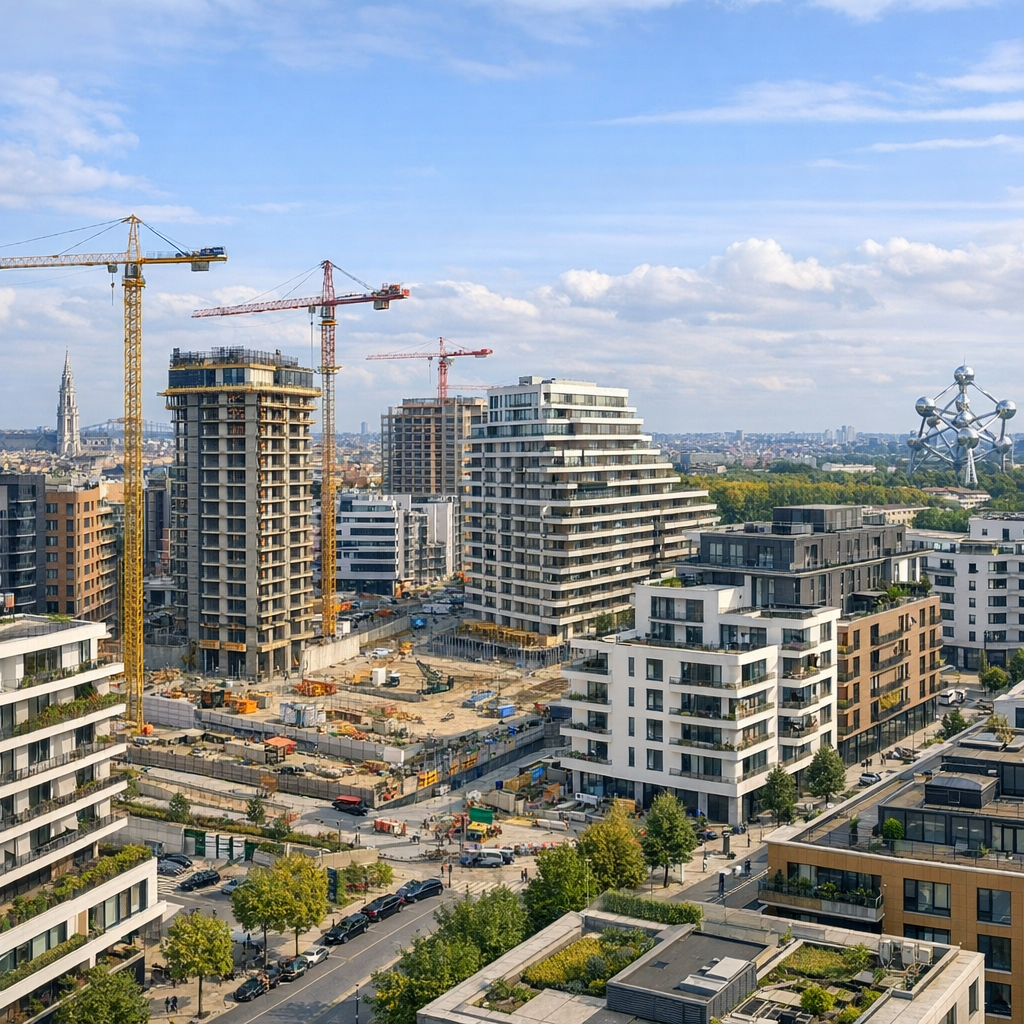
Brussels’ real estate market is experiencing notable transformations, influenced by new developments, shifting demand, and evolving investment opportunities. Understanding these changes is crucial for prospective buyers, investors, and residents.
Market Trends and Pricing
In recent years, Brussels has seen a moderate increase in property prices. The average price per square meter is approximately €3,982, reflecting a 4.42% annual rise. This positions Brussels as a relatively affordable European capital for real estate investment. However, prices vary significantly across municipalities. For instance, Ixelles commands around €4,237 per square meter, while Anderlecht averages €2,742, indicating a 54% price gap within the city. Such disparities highlight the importance of neighborhood selection in property investment.
Key Developments and Projects
Several significant projects are reshaping Brussels’ urban landscape:
LionCity I Redevelopment
The former Delhaize headquarters in Sint-Jans-Molenbeek is undergoing a major transformation into a sustainable mixed-use district. This project emphasizes circular construction and zero-energy design, aiming to revitalize the area and provide modern housing solutions.
Jourdan Square
Located near Place Jourdan and the European Quarter, Jourdan Square offers 30 luxury apartments ranging from studios to four-bedroom units. Combining modern comfort with preserved architectural charm, this development provides an ideal living environment with amenities within walking distance.
Viridis in Schaerbeek
Viridis comprises five energy-efficient buildings featuring 115 apartments, offices, retail spaces, and community services. Situated close to media hubs and the future Mediapark.brussels, it offers a high-quality urban living experience.
Investment Opportunities
Brussels presents diverse investment opportunities. The city’s dynamic market, coupled with ongoing developments, offers potential for capital appreciation. Notably, the reduction in registration duties in regions like Wallonia has stimulated market activity, suggesting a favorable environment for investors.
Conclusion
Brussels’ real estate market is characterized by its diversity and ongoing evolution. Staying informed about market trends, upcoming developments, and regional policies is essential for making informed decisions in this vibrant city.