

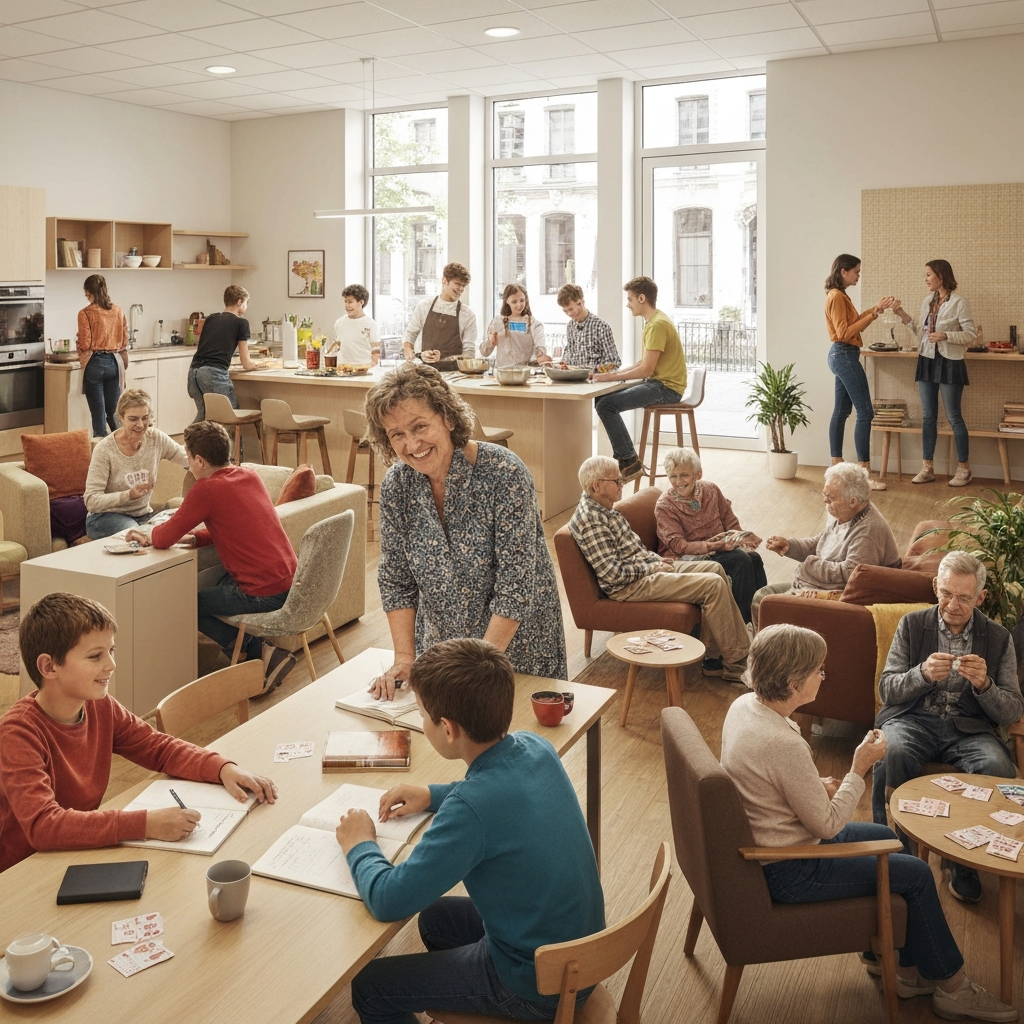
In the heart of Brussels, community centres stand as vibrant hubs where residents come together to engage in a myriad of activities, fostering social cohesion and cultural enrichment. These centres offer a welcoming space for individuals to connect, learn, and contribute to their neighborhoods.
Spaces for All
Brussels boasts 22 community centres, collectively providing over 46,000 square meters of space—nearly 12 times the size of the Grand Place. These facilities are available for various initiatives, including organizational meetings, artistic projects, and private events. They serve as venues where citizens can meet, relax, and participate in diverse activities, promoting a sense of belonging and community spirit.
Diverse Services and Activities
Each centre offers a range of services tailored to the needs of its local community. For instance, the Everna community centre in Evere supports the Flemish community’s identity and cultural quality by providing information on cultural, social, and sports activities. It also offers services such as babysitting, information desks, and space rentals for associations. Additionally, Everna organizes events like concerts, theater performances, film screenings, and educational courses, inviting active participation from the community.
Fostering Social Cohesion
Beyond providing physical spaces, these centres play a crucial role in strengthening social ties. They host workshops, language courses, and cultural events that encourage interaction among diverse groups. By offering platforms for residents to share experiences and collaborate on projects, community centres contribute significantly to the social fabric of Brussels.
Supporting Local Initiatives
Community centres also support local initiatives aimed at improving neighborhood life. For example, the ‘Made in Querelle’ project call encourages citizen initiatives that positively impact the quality of life, conviviality, and social cohesion in the Querelle neighborhood. Selected projects receive grants to bring their ideas to fruition, demonstrating the city’s commitment to empowering residents and fostering community-driven development.
Conclusion
Brussels’ community centres are more than just buildings; they are the lifeblood of the city’s neighborhoods, offering spaces where culture, education, and social interaction intersect. By participating in the activities and services they offer, residents can enrich their lives and contribute to the vibrant tapestry of Brussels’ community life.