

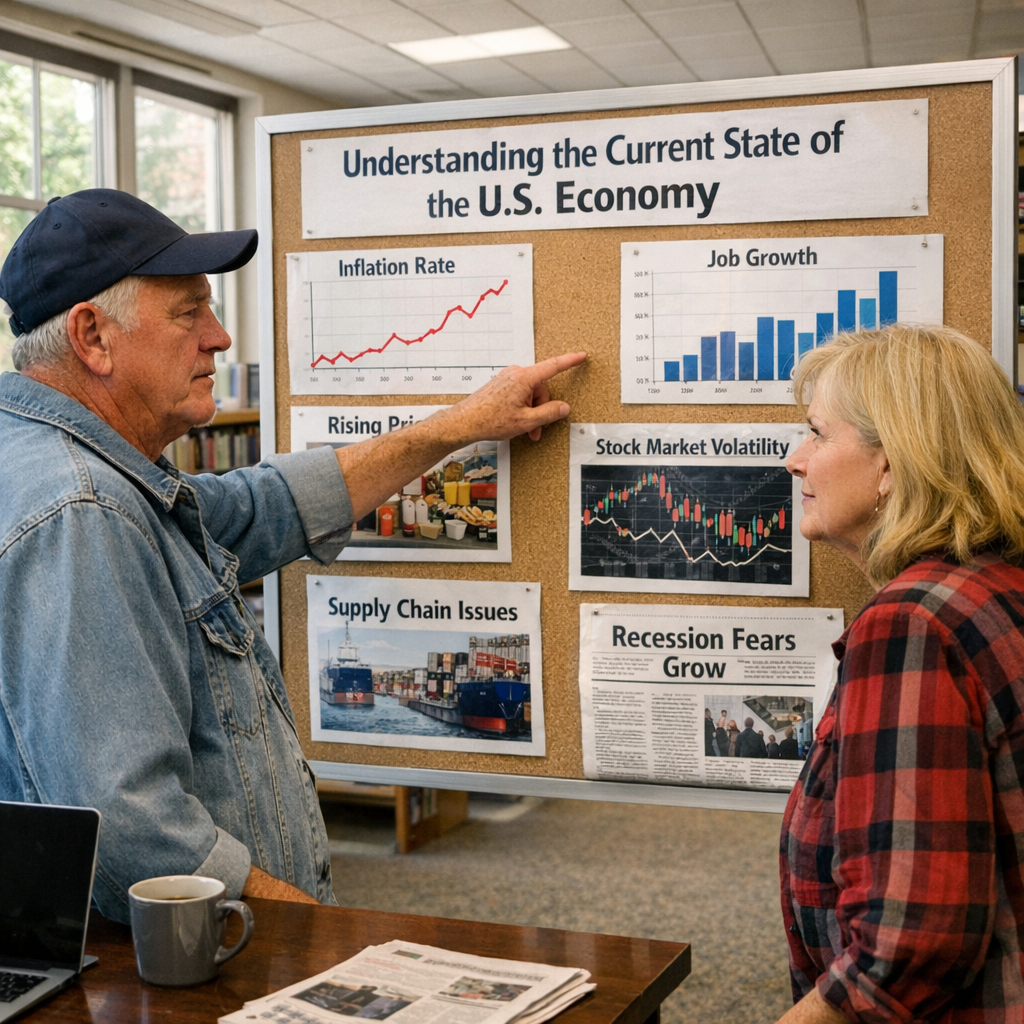
The United States economy has been experiencing a period of moderate growth, with recent data indicating a 2.4% increase in gross domestic product (GDP) in the fourth quarter of 2026. This marks an improvement from the 2.2% growth observed in the previous year. The International Monetary Fund (IMF) has described the U.S. economy as “buoyant,” while also cautioning about potential risks associated with rising federal debt and the impact of tariffs.
Unemployment rates have shown a positive trend, decreasing from 4.5% in late 2025 to 4.1% in 2026. This decline suggests a strengthening labor market, which could contribute to increased consumer spending and overall economic stability.
However, inflation remains a concern. The Federal Reserve has been working to manage inflation rates, aiming to bring them down to the target of 2% by 2027. The central bank has adjusted its benchmark interest rate to 3.4%, with plans to maintain this level unless significant changes occur in the job market.
Despite these positive indicators, certain sectors are facing challenges. Small businesses, in particular, are experiencing increased pressure due to rising bankruptcies and weak job growth. These issues highlight the need for targeted support to ensure the resilience of this vital segment of the economy.
In summary, while the U.S. economy shows signs of growth and stability, it is essential to monitor and address underlying challenges to sustain this progress.